
Blog posts tagged "LXD"

An overview at what’s new in LXD 5.16 and 5.17 releases.

Early access to LXD graphical user interface is now available.

In this blog, we will go through some of the most significant features we have included in our monthly releases so far this year. Links to each of the release announcements are linked for detailed information.

Containerization vs. Virtualization : understand the differences and benefits of each approach, as well as connections to cloud computing.

Deploy your own micro cloud with a single command in just a few minutes. Try out the new significantly simplified deployment process.

Are you looking to host your own ERP cost-effectively, or perhaps evaluating solutions to host other types of applications for your small business? Learn how you can do that with LXD.
Are you looking for a way to practice your Linux commands without jeopardizing your underlying system? Want to practice running complex infrastructure use cases? Want to understand how the application you develop on your laptop would behave on a cloud instance? Try LXD.

In this blog, we’ll explore some of the main VM features that help you run your infrastructure on LXD.

LXD multi-user feature allows for secure development in shared development environments. Learn more about the feature in this blog.

The stable release of LXD, the system container and VM manager, is now available. LXD 5.0 is the fourth LTS release for LXD, and will be supported for 5 years, until June 2027.
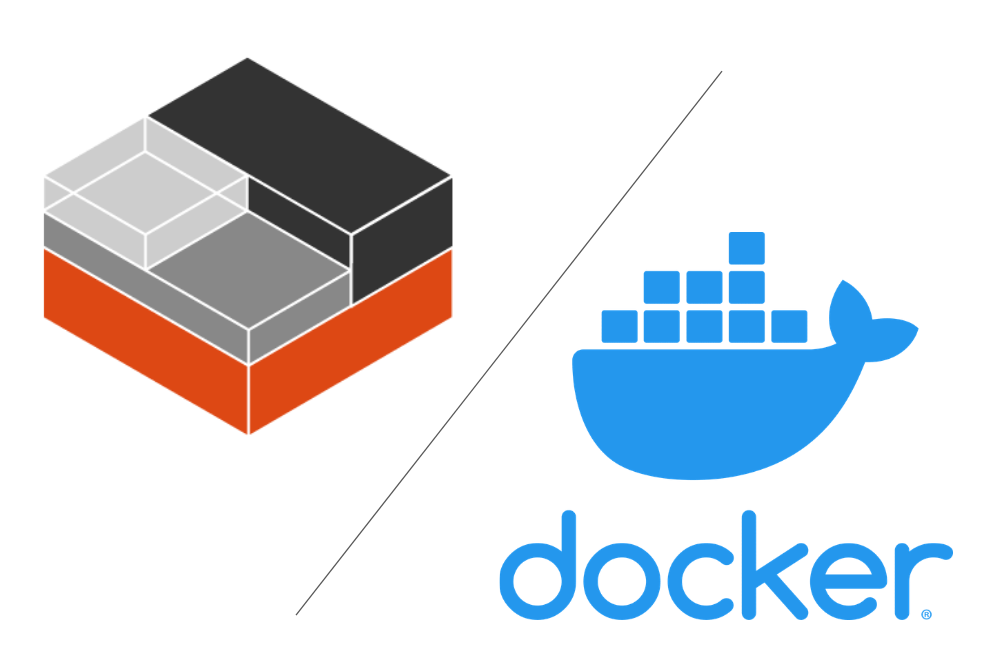
When talking about containers, a common confusion for potential users of LXD is that LXD is an alternative to Docker or Kubernetes. However, LXD and Docker are not competing container technologies, and they tend to serve completely different purposes. In this blog, we’ll briefly discuss the differences and the suitable use cases for both.

This blog explains what are Linux containers, how they differ from application containers, and when should you use them.

With the release of MAAS 3.0, we moved LXD virtual machines out of Beta. Several articles in the MAAS documentation address LXD. Since no document ties all these features together, though, it’s time for a topical blog about LXD. About LXD LXD, pronounced “lex-DEE,” is a container manager, as well as a virtual machine manager.
This is a guest post authored by Chris Psaltis. We are reproducing it here with Chris’ permission. Chris is the co-founder and CEO of Mist.io and uses Ubuntu and LXD on his platform on a regular basis. Thanks, Chris! One of the advantages that Ubuntu brings to the cloud equation is improving an organization’s ability

22nd October 2020: Canonical today released Ubuntu 20.10 with optimised Raspberry Pi images for desktop in support of learners, inventors, educators and entrepreneurs, bringing the world’s most open platform to the world’s most accessible hardware. “In this release, we celebrate the Raspberry Pi Foundation’s commitment to put open computi

Set up and run your own homelab with the LXD Ubuntu Appliance. Spin up and manage virtual machines (VMs) and containers, run and test workloads across platforms and architectures, and rest assured of security and updates with Ubuntu Core. Follow the tutorial to get started or read on to learn why you might care. Why